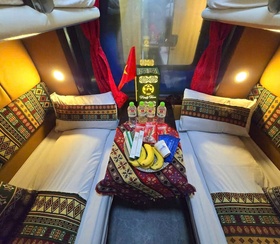

Discover Sapa
Train or Bus - Choosing the best way to get to Sapa
Nestled high in the Hoang Lien Son Mountain of Northern Vietnam, Sapa ranks among the top destinations for travelers worldwide. While you can get to this charming town by many options, from train, bus, to private car, or even motorbike, the Hanoi - Sapa train and bus are the two most popular choices.
If trains offer a relaxed and scenic ride with a unique experience and extra comfort, bus travel shortens travel time and saves the most for your trip. Let's explore both options and find out the best way to get to Sapa in this article!
Train to Sapa: The unique experience
Hanoi - Sapa tourist trains are different carriages on the same state-run trains but operated by private companies with upgraded cabins and enhanced service. Although schedules are similar based on the national railway timetable, tourist trains feature different design and amenities, resulting in different price range and experience.

Duration & schedule
Since there is no direct train from Hanoi to Sapa, you’ll need to take an 8-hour train to Lao Cai Station (around 35km far from Sapa) and take a 1- to 1.5-hour drive by private car or bus to Sapa. The total travel time by train from Hanoi to Sapa is 9 to 9.5 hours.
Currently, two trains from Hanoi to Sapa are SP3 and SP7, and two from Sapa to Hanoi are SP4 and SP8. Trains run daily at a fixed schedule.
- SP3: Hanoi (22:00) - Lao Cai (5:55)
- SP7: Hanoi (22:49) - Lao Cai (6:25)
- SP4: Lao Cai (21:30) - Hanoi (5:35)
- SP8: Lao Cai (12:05) - Hanoi (19:30)
Ticket type & price range
Tourist train tickets are classified by sharing or private cabins, standard or VIP berths. Sharing cabins accommodate 4 passengers, ideal for solo travelers or couples/friends seeking a cost-saving option. Private cabins include twin beds or a double bed, perfect for couples or two friends preferring more privacy and comfort. You can book a standard soft berth in a sharing cabin or a private cabin.
- Standard soft berth: A single berth on lower or upper deck in a shared 4-berth cabin. This ticket includes basic amenities, such as bedding, complimentary mineral water & snacks, dental kit, etc.
Price: $34 - 57/person/way
- Vip berth/Private cabin: Two berths on lower deck in a 4-berth cabin. Two upper berths are folded to enlarge space and increase privacy). Beyond basic amenities, complimentary soft drinks or beer can be included.
Price: $92 - 172/cabin/2 persons/way
- Premium/Suite cabin: Without folded berths, these cabins only include twin beds or a queen/king bed. Apart from the highest comfort and privacy, extra benefits will be added such as soft drinks/ beer/ wine.
Price: $140 - 196/cabin/2 persons/way
***Note: If your group of 4 would like an entire cabin, make sure you book early in advance and note your request. The operator'll do their best to arrange an entire cabin for your group, based on availability.
Pros & cons
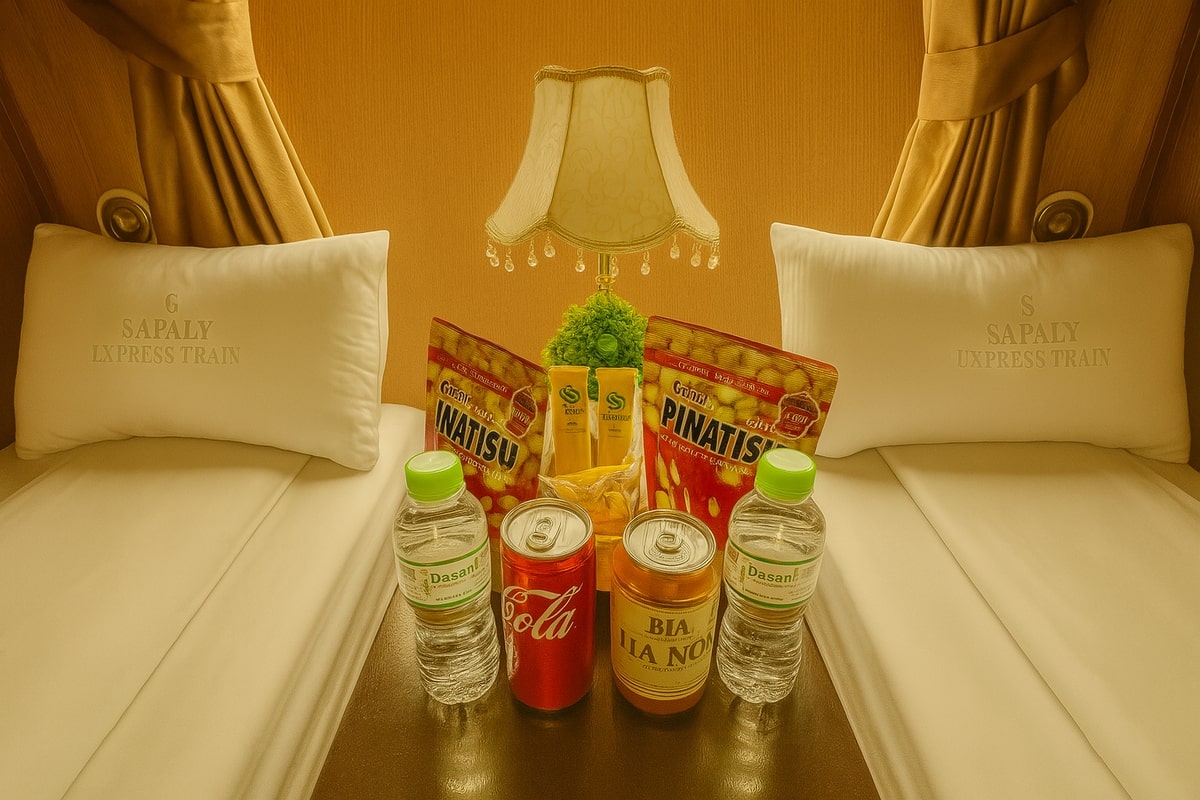
Traveling by train from Hanoi to Sapa has some pros and cons below:
Pros:
- Authentic experience: The train rhythms on vintage carriages with night charm create an authentic experience on a typical Southeast Asian railway.
- High safety: With dedicated tracks and predictable routes, trains offer the highest safety among transports.
- More space: Single soft berths or private cabins offer ample leg room. Guests can even walk around the carriage.
- Diverse amenities: Plenty of amenities on the train, namely air conditioning, free Wi-Fi, luggage storage, pillow and blankets, reading lights, power outlets, toiletries. Some premium trains offer earplugs, eye masks, slippers, paper cups, fresh fruit juice or herbal tea. A shared toilet is available on every carriage.
- Time optimization: Night travel saves a day of travel. Travelers can sleep during the journey and wake up fresh, ready to explore the town.
- Social connection: Sharing cabins or walking around the carriage create an opportunity to connect with friends all over the world.
Cons:
- Long travel time: The slow pace of train and transfer needed from Lao Cai to Sapa make the total travel time the longest (9 - 9.5 hours)
- Limited schedule: Only 2 trains from Hanoi to Sapa and 2 from Sapa to Hanoi each day. Among those, only 1 daytime train departs at 12:05 pm from Sapa to Hanoi.
- Noisy for light sleepers: Noisy and bumpy carriage movement can disturb sleep for light sleepers or those unaccustomed to train travel.
- Higher total cost: The train ticket and the extra cost of Lao Cai - Sapa transfer are usually higher than the bus cost.
Who is train travel best for?
Sapa train travel is ideal for:
- Those who want to have an authentic Vietnamese rail experience.
- Those who seek more comfort and privacy.
- Those who want to save a day of travel and wake up to the mountain sunrise scenery.
- Those who don't mind a long travel time and another transfer from Lao Cai Station to Sapa.
Bus to Sapa: The efficient choice
While the train focuses on a unique and comfortable travel experience, the bus offers optimal travel efficiency, both time and cost.
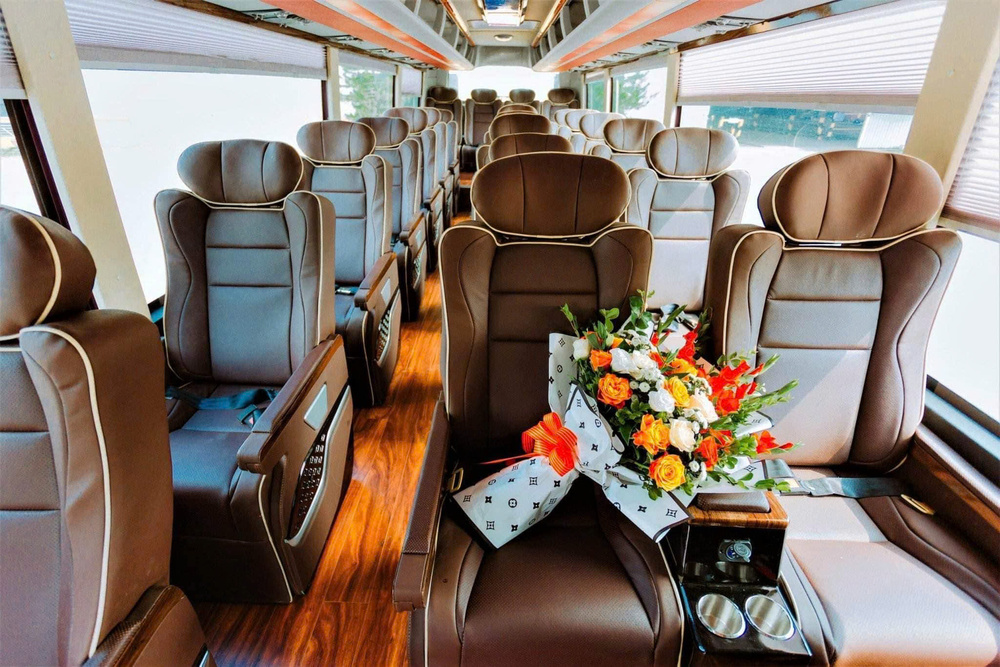
Duration & schedule
The direct route is one of the biggest advantages of bus travel from Hanoi to Sapa. It takes you 6 - 7 hours to reach Sapa center. Many buses drop guests off directly at their hotel in the center, while some stop at central points like Stone Church or Sapa Square. From there, you can take a short walk or easily get a short taxi to your hotel.
The bus schedule is flexible. Sleeper buses offer multiple trips from early morning until late night, typically from 5:30 to 23:00, some at midnight. Meanwhile, limousine buses/minivans often operate morning or afternoon departures only.
Ticket type & price range
Travelers have 3 options for Hanoi - Sapa buses: Standard sleeper bus, Limousine bus, and Private cabin bus. Each bus type offers different tickets for different price ranges.
Standard sleeper bus
Offering 34 - 40 soft berths, a standard sleeper bus is the most economical way to get to Sapa. Berths are typically arranged in 3 rows on 2 levels, provided with basic amenities such as air-conditioning, USB charger, bottle of water, blanket, or free Wifi. While standing out for its lowest price and frequent departures, this option provides limited legroom and privacy. The price for sleeper buses range from $10 - 16 per person per way.
Limousine bus
A great balance between price and comfort makes limousine buses one of the best choices for Hanoi - Sapa trips. Including 9 to 28 soft, reclining seats, limousine buses save much time for pick up and drop off and offer a quieter space throughout the journey. Guests usually can enjoy air-conditioning, charging ports, USB, Wifi, mineral water or wet tissue on the bus. Note that limousine buses only include reclining seats, and limited legroom may not be ideal for tall people. The price ranges from $16 to 26 per person per trip.
Private cabin bus
This is the most expensive but comfortable option among Hanoi - Sapa buses, perfect for couples or solo travelers seeking privacy. These buses offer 21 to 24 private cabins, either single or double, located on either the lower or upper level. Each comes with a soft mattress, pillow, ample legroom, adjustable backrest, curtain, blanket, USB port, LCD, Wifi, reading light, and complimentary water. The rate for lower-level cabins is higher than that of upper-level ones.
- Single cabin: $18 - 20/cabin/person
- Double cabin: $28 - 40/cabin/ 2 persons
Pros & cons
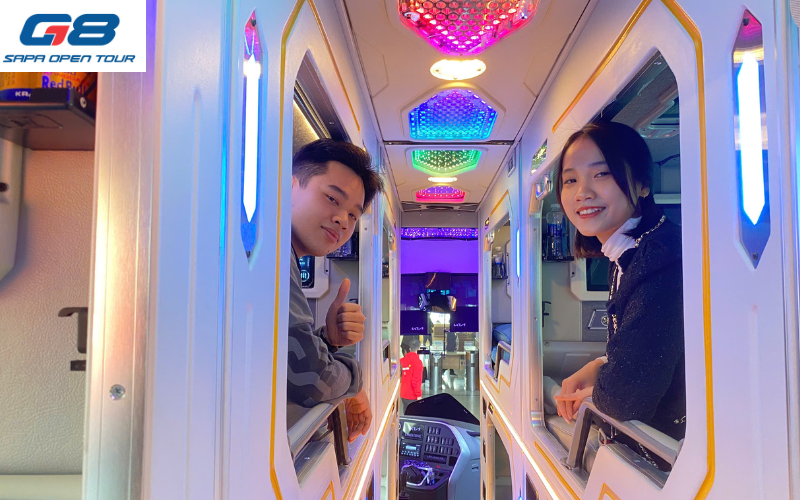
Taking a bus from Hanoi to Sapa also comes with both pros and cons.
Pros:
- Fast & direct journey: Buses travel directly to Sapa town for approximately 5.5-6 hours, eliminating the hassle and additional costs of changing transportation.
- Low price: The bus cost is lower than the train cost, starting from $16 per person per way.
- Flexible schedule: Bus schedules from day to night allow you to choose a suitable departure time that suits your plan, no need to wait until night or worry about limited availability on the train.
Cons:
- Less unique experience: Using bus travel, travelers miss the unique cultural charm of historic railway travel.
- Potential motion sickness: Winding mountain roads with sharp turns and steep grades easily cause motion sickness.
- Limited space: Both limousine buses or sleeper buses have a tight space. Although you can stretch your legs on a sleeper bus, you still can’t walk around freely like on a train.
- Lower safety than train: Winding mountain roads are less safe than dedicated train tracks, especially during bad weather conditions like rain, storms, or dense fog.
- Limited amenities: Not many buses have a toilet (requiring one or two bus stops on the way). Basic amenities include air-conditioning, USB or charger, Free Wi-Fi, bottles of water or cold towels.
Who is bus travel best for?
Bus travel is best for:
- Those who prioritize short travel time and a direct route
- Those who want to save the best for the trip
- Those who need a flexible schedule
Table of comparison
|
Sapa Train Travel |
Sapa Bus Travel |
|
|
Best for |
Solo travelers, couples, friends, families looking for unique experience, privacy, and extra comfort |
Budget-minded solo travelers, couples, friends want a direct trip and flexible departure time |
|
Duration |
9 - 9.5 hours |
6 - 6.5 hours |
|
Frequency |
Limited to 2 trips per day |
Multiple trips from morning to mid-night |
|
Price range |
$34 - 57/berth $92 - 196/cabin/2 persons |
$10 - 16/standard sleeper berth $16 - 26/limousine seat $18 - 40/VIP private cabin |
|
Comfort |
High, all sleeper cabins |
Medium (standard sleeper bus/ limousine) to high (private cabin) Onboard toilets are uncommon |
|
Onboard toilet |
Yes, on every carriage |
Uncommon, typically on cabin buses |
|
Amenities |
Wifi, air-conditioning, luggage storage, pillow and blanket, reading lights, power outlets, toiletries, mineral water, snacks, fresh juice/tea, soft drinks/beer, wine, etc. |
Wifi, air-conditioning, luggage storage, blanket, power outlet, mineral water, LCD (on cabin buses only) |
|
Safety level |
High safety |
Lower safety, especially on bad weather |
|
Scenic experience |
Great mountain sunrise view |
Moderate view |
|
Cultural experience |
Unique, authentic, local |
Less authentic |
Conclusion: Train or Bus?
Both train and bus come with great advantages and face their own drawbacks. No matter what you choose, the one that matches your travel style, budget and preference is the right choice. Here is a pro tip:
- If you prioritize authentic experience, great comfort, and high safety, the Hanoi - Sapa train offers a relaxing trip with spectacular mountain views.
- If you value a faster and direct trip, affordable prices, and flexible schedules, bus travel is definitely the one.
Customer Support

- Fast, hassle-free booking: book your train tickets and other service with peace of mind
- Local Support: Our staff is available to answer questions, handle changes, or provide travel updates.
- Personalized Assistance: Get tailored advice on train tickets, hotel options, and tour add-ons