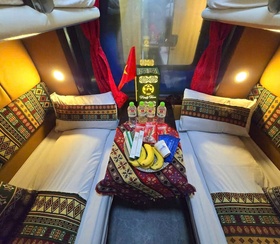

Discover Sapa
Hanoi to Sapa by Train: The Ultimate Booking Guide
Sapa has long been a destination that captivates visitors: golden terraced fields, ethnic minority villages nestled in valleys, and Fansipan peak looming high in the clouds. For many, the journey there is part of the adventure—and one of the most atmospheric ways to go is by taking the overnight train from Hanoi to Lao Cai.

Stunning terraced rice fields in Sapa (Photo: Pixabay via Pexels)
Why Sapa?
If endless layers of terraced rice fields—lush green in summer or golden at harvest—make your heart skip a beat, if you crave crisp mountain air that feels almost untouched, or if you’re simply curious about the lives of the H’Mông, Dao, or Tày people, then Sapa is your place. And of course, standing tall above it all is Fansipan, the “Roof of Indochina,” a challenge too tempting to resist for adventures.
Why the train?
Sure, there are buses, limousines, even the option of driving yourself.
But for many, the night train has a charm that’s hard to put into words. The steady rocking, the rhythmic clatter of the tracks, the sense of gliding through sleeping countryside in the dark—it all feels like part of the adventure. Compared to buses, the train is safer, easier on motion sickness, and offers comfy berths where you can actually stretch out and sleep. By morning, you wake up to mountains rolling past your window.
What to expect on a Sapa train ride?
It isn’t fast.
The train takes its time, sometimes even dragging its feet a little. But that unhurried pace is what makes it special—it carves out rare, quiet moments for you to enjoy the journey instead of just rushing to the destination. If you’re the kind of traveler who loves to savor the road, who sees the trip itself as part of the memory, then the overnight train to Sapa will feel like it was made for you.
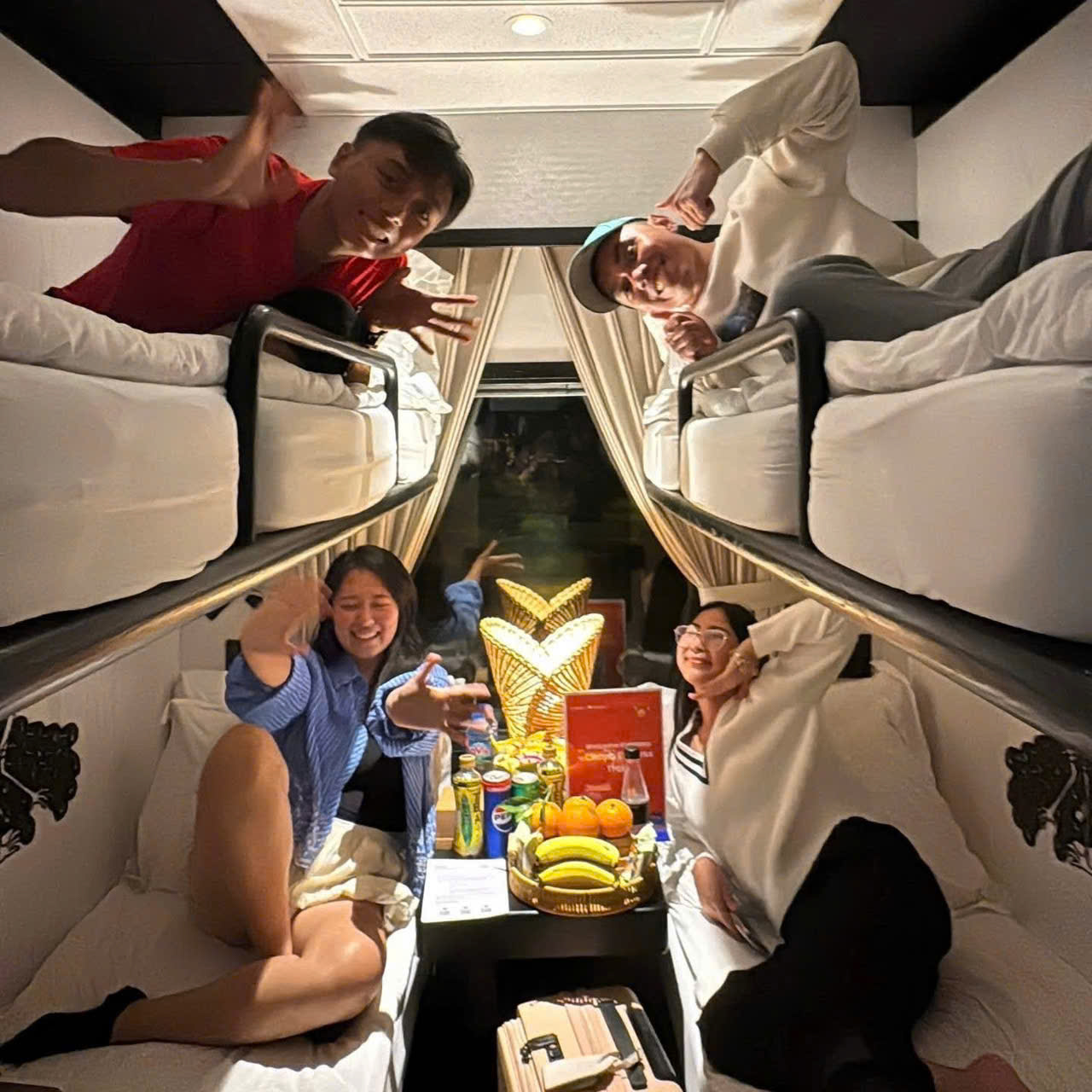
A laughter-filled leisure experience with your loved ones (Photo: Chapa Train)
Understanding the Hanoi–Lao Cai Train Route
Before we get carried away with the romance of night trains, here’s a little reality check: the train doesn’t drop you right in the middle of Sapa. Its final stop is Lao Cai, a small border town near China. From there, you’ll need to hop on a car or minibus for another 45 minutes, zigzagging up winding mountain roads, before you finally arrive in misty Sapa town.
Distance & Travel Time
The journey from Hanoi to Lao Cai covers just over 300 kilometers and takes around 8 hours by train. If you leave Hanoi in the evening, you’ll wake up early the next morning in Lao Cai—just in time to catch a transfer and greet Sapa in the soft light of dawn. Including the drive up from Lao Cai, the whole trip adds up to roughly 9 hours. Sounds long, I know, but if you think of it as a moving night’s sleep, it makes perfect sense.
The Scenery Along the Way
Don’t assume it’s all about sleeping. If you peek out the window—or set an early alarm before the train rolls into Lao Cai—you’ll be rewarded. Some stretches of the track hug the Red River, with dark green mountains casting their reflections into the water. As the train nears Lao Cai, the landscape shifts: fewer houses, more fields and farms, and then, almost suddenly, the dramatic outline of mountains in the distance. It’s like a quiet hint that the “land of clouds” is waiting just around the corner.
Train Options & Classes
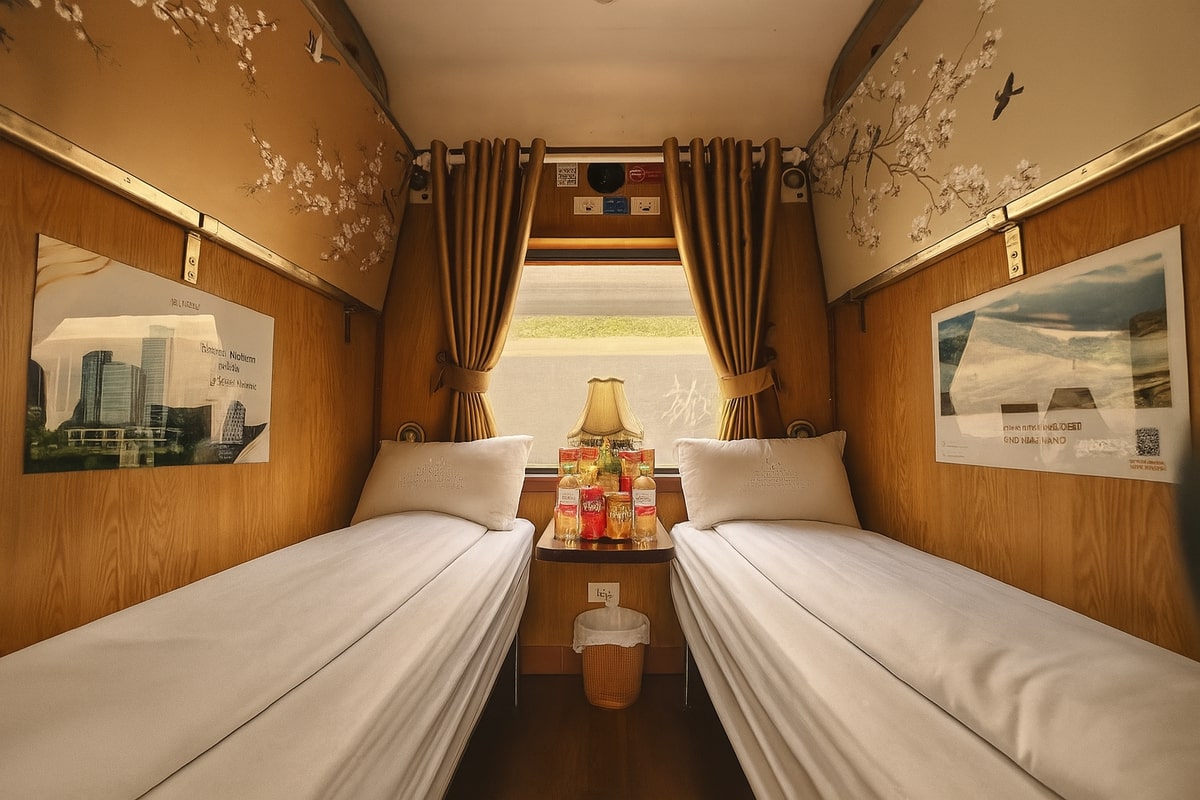
A VIP cabin provides extra privacy and comfort (Photo: Sapaly Train)
When people hear about the “Hanoi–Lao Cai night train,” they often imagine there’s just one standard option. But once you actually start looking, you realize there’s a whole little universe to choose from: the no-frills public carriages with their authentic, slightly rough-around-the-edges vibe, or the privately run tourist cars—cleaner, cozier, more polished, and, of course, pricier. Picking a carriage feels a lot like choosing a homestay or hotel: it all comes down to your budget, your style, and just how much comfort you want to treat yourself to.
Vietnam Railways’ public carriages
The budget-friendly choice for anyone looking to save money. The cabins here are basic—simple bunks or seats that do the job, nothing fancy, but perfectly fine for getting some shut-eye through the night. It feels very “Vietnamese train”: a little noisy, a little rough around the edges, but somehow endearing in its own way.
Private tourist carriages
These are attached to the same train but usually provide a higher standard of comfort. Interiors are cleaner, bedding feels fresher, and lighting is softer, making the journey more restful. Prices are higher, but for some travelers the added comfort is worthwhile.
Cabin Types
The most common option is the four-berth soft sleeper, often chosen by families or small groups. Couples sometimes reserve the whole cabin for privacy, even if it means paying for all four berths. A few operators also offer two-berth deluxe cabins, which provide a quieter, more private space. Onboard Amenities
Most carriages are equipped with air-conditioning, bedding, and shared toilets at the end of each car. Tourist carriages may add small touches such as bottled water, towels, or light snacks. Wi-Fi is uncommon, so it’s a good idea to bring a book, music, or something downloaded in advance. Still, many travelers find that simply watching the train move quietly through the night becomes a highlight of the trip in itself.
Departure Times & Schedules
Most trains to Lao Cai leave in the evening, usually around 10:00 - 10:40 PM. After a night on board, you’ll arrive at Lao Cai station between 6:00 - 6:30 AM the next morning. The timing works out quite well: you get a full night’s sleep, and when you wake up, you’re already in the northern mountains.
Which train is best for first-time visitors?
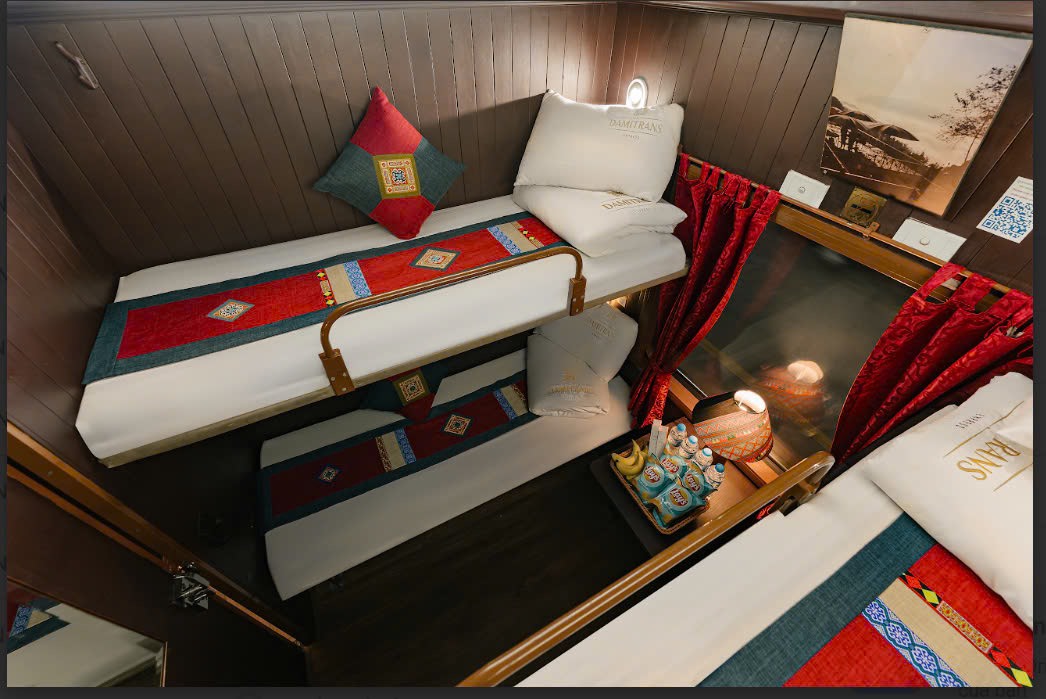
An overnight train is ideal for first-timers to Sapa (Photo: Damitrans Train)
If it’s your first time taking the train to Sapa, it’s best to choose a service that arrives closer to 6:00 AM. Our most popular option is Chapa Express which is among the few that continually seek to improve its service. That way, the transfer up to Sapa (about 45 minutes) fits nicely into the morning, and you’ll reach town just as the day begins.
A small tip to avoid waiting in Lao Cai
One useful piece of advice is to book your transfer in advance. Many tourist train operators include a connecting minibus service directly from Lao Cai to Sapa, or we can also arrange a private transfer for you. That way, when you step off the train, your ride is ready and waiting—no wandering around the station, no long wait until daylight.
How to Book Your Tickets
HanoiSapaTrain.com offers easy booking process. You can simply choose the train you prefer, with date and number of passengers: https://www.hanoisapatrain.com/ticket.html
How far in advance should you book?
During peak travel seasons—September to November for the rice harvest, and March to May for the spring flowers—it’s best to book at least one to two weeks in advance. This is especially true if you’re aiming for private tourist carriages, which tend to sell out quickly. Outside of peak times, last-minute bookings are sometimes possible, but arranging tickets early will give you peace of mind.
Payment & receiving your ticket
After completing the booking you will be prompted for payment. We accept major credit cards and also Paypal. After that we will confirm you itinerary and send you a train voucher to board.
Costs & Value for Money
Prices can vary quite a bit depending on the type of carriage you choose. Here’s a side-by-side look at public trains versus private tourist carriages to give you a clearer idea of what you get for what you pay.
During peak seasons (September–November for the rice harvest, March–May for spring flowers), fares on public trains may increase by about 10–20%. On the other hand, some private tourist carriages run group discounts or early-booking deals, so planning ahead can save you a fair amount.
What to Expect on the Journey
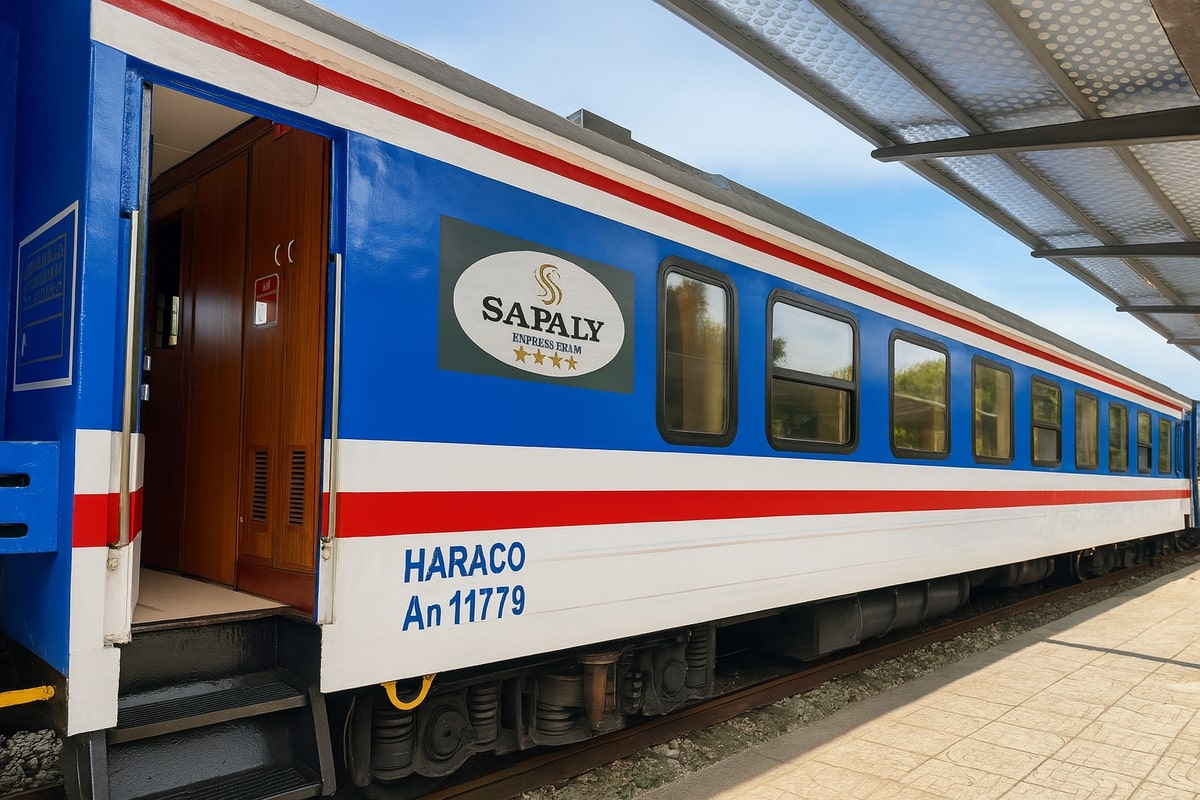
Get to the station at least 30 minutes before departure for a smooth check-in (Photo: Sapaly Train)
Boarding in Hanoi
Trains to Sapa depart from Hanoi Train Station at 120 Le Duan Street. Evenings can get busy, so it’s a good idea to arrive about 30 minutes early to find your carriage and seat or berth without stress. If you have an e-ticket, simply show the booking code to the staff at the gate.
Learn more about exchanging ticket at Hanoi station: https://www.hanoisapatrain.com/discover-sapa/how-to-exchange-ticket-at-hanoi-train-station.html
Onboard facilities
Each carriage has shared toilets at the end, and their cleanliness can vary from trip to trip. Some cabins have power outlets, though they don’t always work, so it’s best not to rely on them. The corridor is narrow — just enough to walk through or pause by the window for some fresh air. There isn’t really a lounge or common area; your cabin is the main space you’ll spend time in.
Sleep quality
You’ll hear the steady rhythm of the wheels and feel the gentle rocking of the train. Many find it soothing, like a lullaby, but light sleepers may be disturbed. Earplugs and an eye mask can make a big difference. Lights inside the cabins are usually dimmed at night, though a bit of glow still comes in from the corridor.
Safety tips
Traveling by train is generally safe, but it’s still wise to keep valuables within reach or in a small bag beside you. Avoid opening the cabin door to strangers late at night. If you’re sharing a cabin with others, lock the door once everyone is inside.
Arrival in Lao Cai
The train usually arrives early in the morning. Lao Cai station is small, and the exit is straightforward. If you’ve pre-booked a transfer, your driver or minibus operator will typically wait at the gate holding a sign with your name. If not, there are public buses and shared vans to Sapa, though they often wait until they’ve gathered enough passengers. Having some cash on hand makes things easier for small expenses at the station.
Pros & Cons vs. Other Transport
Compared to sleeper buses, the train feels a lot more comfortable. You get your own berth to stretch out, the ride is steadier, and there’s little risk of motion sickness. Sleeper buses, on the other hand, can feel cramped and it’s hard to get a truly restful night, though they do cost less. Another point in the train’s favor is reliability: schedules are fairly consistent and not affected by traffic or road conditions, whereas buses can be delayed, especially on the winding mountain roads.
Limousine vans, which have become very popular in recent years, are a different story. They take only about five to six hours, with spacious seats and smaller groups of passengers, so the ride feels quick and convenient. Still, it’s several hours of sitting rather than lying down. With the train, you sleep through the night and wake up in Lao Cai, which in a way saves you a hotel night. The trade-off is time: the whole journey by train plus transfer takes closer to nine hours. In terms of cost, limousine vans are usually on par with, or even cheaper than soft-sleeper train tickets.
To sum it up
In the end, there isn’t one “best” choice. If you value a slow, safe, and memorable journey, the train has its charm and is worth trying at least once. If your priority is speed and practicality, the bus or limousine will likely suit you better.
The overnight train from Hanoi to Sapa is not the fastest way to get there, and it’s certainly not the cheapest, but it has a charm of its own. There’s something about slowly leaving the city behind, listening to the steady rhythm of the tracks through the night, and waking up to misty mountains on the horizon. For travelers who enjoy the journey as much as the destination, it’s an experience worth trying at least once. If your priority is simply to get to Sapa quickly, then a limousine van or sleeper bus might suit you better.
The best choice is the one that fits your own style and priorities. Sapa will still be waiting—with its terraced rice fields, early morning fog, and the warm smiles of local people—ready for you to discover in your own way.
Customer Support

- Fast, hassle-free booking: book your train tickets and other service with peace of mind
- Local Support: Our staff is available to answer questions, handle changes, or provide travel updates.
- Personalized Assistance: Get tailored advice on train tickets, hotel options, and tour add-ons